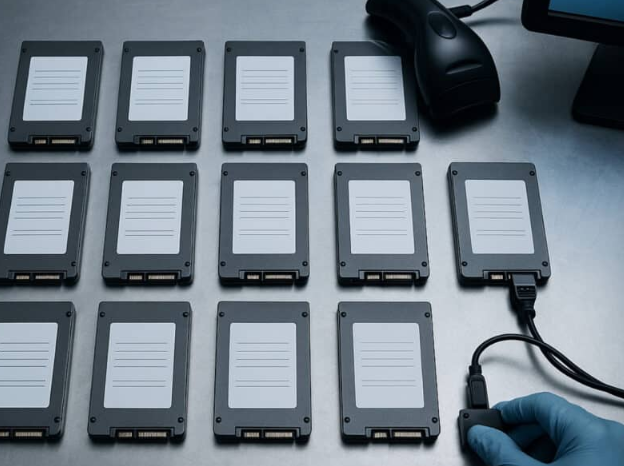

Banks and credit unions invest heavily in securing customer data while it’s active, encryption, multi-factor authentication, and constant monitoring for suspicious activity. Yet the equipment holding that same data at the end of its working life doesn’t always receive the same level of scrutiny. Thorough ssd destruction services close this often-overlooked gap, addressing a stage of the data lifecycle that’s easy to underestimate compared to the more visible security measures banks are known for.
Why Financial Data Carries Such Long-Term Risk
Account numbers, transaction histories, and personal financial details don’t simply expire the way a temporary password might. A breach involving retired banking equipment can expose information that remains useful to fraudsters for years, making the end-of-life handling of these devices just as important as the security protecting them while actively in use.
This durability of financial data is exactly what separates it from many other categories of sensitive information, since a customer can’t simply generate a new account number the way they might reset a compromised password.
See also: Environmental Impact of Crypto
Regulatory Frameworks Banks Already Navigate
Financial institutions operate under some of the most rigorous data protection regulations of any industry, and these frameworks typically extend explicitly to how equipment must be handled at retirement, not just how data is protected while systems are active. Documented, verifiable destruction isn’t an optional best practice here, it’s frequently a direct regulatory expectation.
Compliance officers who treat this requirement as simply another checkbox often underestimate how closely examiners actually scrutinize the supporting documentation during a routine review cycle.
Legacy Systems and Overlooked Storage
Banks often retire equipment gradually over long system migrations, and older servers or backup systems can sit in storage for extended periods before finally being decommissioned. These legacy systems sometimes get overlooked in a bank’s regular destruction schedule simply because they’re no longer actively used, even though they may still hold years of historical customer data on their drives.
A periodic audit specifically looking for this kind of forgotten legacy equipment, rather than assuming only recently retired devices need attention, closes a gap that can otherwise persist unnoticed for years.
The Branch-Level Complication
Unlike a single corporate headquarters, banks typically operate dozens or hundreds of individual branches, each generating its own retired equipment, teller terminals, branch servers, and administrative computers, on its own schedule. Coordinating consistent destruction practices across this many locations requires a centralized policy rather than leaving each branch manager to handle disposal independently.
ATMs and Specialized Banking Hardware
Beyond standard office computers, banks retire specialized equipment like ATMs and transaction terminals that carry their own unique data security considerations. These devices often require destruction providers with specific experience handling financial hardware, not just general office IT equipment, given the specialized components and data storage involved.
Verifying a provider’s specific experience with this kind of specialized hardware, rather than assuming general IT destruction expertise automatically transfers, is worth confirming directly before signing any agreement.
Third-Party Vendor Risk in the Destruction Process Itself
Choosing a destruction provider is itself a vendor risk decision that banks need to evaluate carefully, verifying certifications, insurance coverage, and the provider’s own security practices before handing over equipment that once held customer financial data. This due diligence mirrors the same rigor banks apply to any other vendor with access to sensitive systems or information.
Skipping this step simply because the vendor relationship involves physical equipment rather than a digital connection is a common but avoidable oversight in an otherwise rigorous vendor management program.
Audit Trails That Satisfy Examiners
Bank examiners routinely review data handling practices as part of regular compliance audits, and having clear, organized destruction certificates readily available demonstrates a bank’s commitment to protecting customer data through the entire equipment lifecycle. Scrambling to reconstruct this documentation after the fact is a position no compliance officer wants to find themselves in.
Balancing Cost With Institutional Risk
Professional destruction carries a real cost, but it’s a modest one compared to the regulatory penalties, customer notification requirements, and reputational damage that can follow a breach traced back to improperly handled equipment. Framing this cost as risk management, rather than pure IT overhead, helps put the investment in proper perspective for institutional leadership.
Presenting this comparison directly to a bank’s risk committee, alongside real figures from past industry breaches, tends to make the case far more persuasively than a purely technical argument about drive-level data recovery ever could on its own.
Final Thoughts
Banks have built entire security cultures around protecting customer data while it’s actively in use, and extending that same rigor through to equipment retirement closes a gap that’s easy to overlook amid more visible security priorities. Consistent, well-documented destruction practices protect both the institution and the customers who trust it with their financial lives, long after any individual account or transaction has closed.

 By
By